A Risk & Compliance Framework for Creator Marketing Governance
Creator marketing can expand a brand’s reach faster than almost any other marketing channel.
The reason? Authenticity.
Creators publish content in their own voice, audiences trust those voices, and once a post goes live, it can reach millions of people within minutes.

From a Risk and Compliance perspective, that scale introduces some complications.
Every creator partnership is also regulated advertising, meaning that every creator is effectively a third-party publisher representing the brand. Thus, every post is a potential compliance, legal, or reputational exposure point.
If disclosures are unclear, regulators can intervene. And if messaging crosses into unsubstantiated claims, legal exposure increases. For Risk and Compliance leaders, the question isn’t whether creator marketing works, but whether it operates under defensible governance.
In this guide, we’ll examine why creator marketing can introduce regulatory and operational risk, and how the right infrastructure can transform creator marketing into a controlled, auditable marketing channel.
Why creator marketing poses compliance risks
Traditional advertising campaigns operate through tightly controlled production pipelines. Messaging is reviewed, approved, and distributed through known channels.
Creator marketing operates differently. Content is produced by independent individuals across multiple platforms, often at high speed and scale. Without structured governance, several compliance risks emerge.
While creator marketing can dramatically expand an enterprise organization’s public presence, it can also pose regulatory and reputational risks. Without structured controls, compliance teams are forced to react to issues, rather than prevent them.
RELATED RESOURCE Enterprise Governance
What compliant creator marketing programs actually look like
Effective creator marketing governance doesn’t mean slowing down marketing teams. Instead, it means embedding compliance controls directly into their workflows.
Well-governed creator programs share four defining characteristics:
Documented approval processes
Centralized creator vetting
Comprehensive content visibility
Audit-ready operational records
When creator marketing operates within these structures, compliance teams gain confidence that their program can scale without increasing risk.
RELATED RESOURCE The Safety and Security That Every Brand Needs From Its Creator Marketing Software
A framework for governing creator marketing at scale
Here’s how Risk and Compliance leaders can ensure creator marketing operates within defensible guardrails.
-
STEP 1
Establish structured approval workflows -
STEP 2
Centralize creator vetting and due diligence -
STEP 3
Monitor brand mentions and campaign content automatically -
STEP 4
Maintain audit-ready records across the creator lifecycle
STEP 1
Establish structured approval workflows
Without structured approval workflows, organizations struggle to reconstruct decision history during audits or investigations.
A compliant workflow typically includes multiple approval stages such as:
- Creator selection review
- Campaign brief alignment
- Draft content review
- Final pre-publication approval
Each stage records the responsible stakeholder, timestamps, and approval status. This process creates a defensible audit trail that shows due diligence was exercised before content was published.
RELATED RESOURCE
Brand Safety Guidelines Every Marketer Should Know
STEP 2
Centralize creator vetting and due diligence
Creators represent your brand in public environments. Therefore, selecting the right partners requires more than reviewing audience metrics. Compliance teams need visibility into the decision-making process behind creator partnerships.
A structured vetting system allows teams to:
- Document creator evaluations
- Record internal comments and concerns
- Track approval or rejection decisions
- Maintain historical partnership records
When creator vetting decisions are centrally documented, organizations can demonstrate responsible partner selection if questions arise later—and, more importantly, avoid such questions in the first place.
RELATED RESOURCE
Creator Evaluation
STEP 3
Monitor brand mentions and campaign content automatically
Compliance risks often emerge outside of official campaign deliverables. Creators may reference the brand organically, discuss products separately from campaign timelines, or respond to audience questions involving brand claims.
While manual monitoring can’t keep pace with this environment, automatic content tracking allows teams to see:
- Campaign-related creator posts
- Organic mentions of the brand
- Platform-wide creator activity involving the brand
This centralized visibility ensures that potential compliance risks surface early, rather than after a post gains traction online.
RELATED RESOURCE
Creator Management
STEP 4
Maintain audit-ready records across the creator lifecycle
Regulatory and legal reviews often require reconstructing events after the fact. Risk and Compliance teams must be able to answer questions about who approved content, when content was reviewed, and whether disclosure requirements were met.
When creator marketing operates across fragmented systems, answering these questions becomes extremely difficult. However, centralized records—including activity logs, approval histories, and archived content—allow organizations to demonstrate compliance quickly and confidently. This level of operational transparency is essential for maintaining regulatory readiness.
RELATED RESOURCE
How Brand Safety Powers Creator Growth
What these changes mean for you
When creator marketing operates with built-in compliance infrastructure, the operational burden on risk teams decreases significantly. Content approvals are documented automatically, creator partnerships include visible due diligence, and brand mentions across creator content are centrally tracked.
Instead of approaching creator marketing as a potential compliance liability, Risk and Compliance teams can support programs that are properly governed. Meanwhile, marketing teams move faster because guardrails are already in place. Most importantly, the organization as a whole gains confidence that creator marketing can scale without exposing the brand to unnecessary risk.
Govern creator marketing with enterprise-grade controls
As creator marketing grows across platforms and markets, organizations need governance systems that match the scale of that activity.
CreatorIQ provides infrastructure that allows marketing teams to run creator programs while maintaining enterprise-level compliance controls.
Within one platform, CreatorIQ centralizes the creator lifecycle:
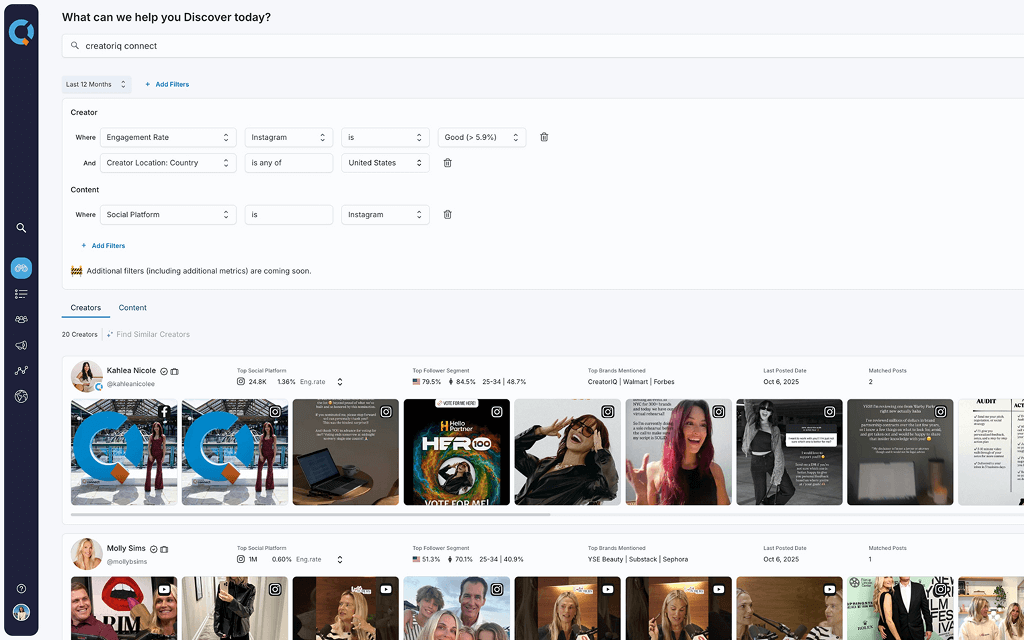
Discovery enables contextual creator evaluation and brand mention analysis.

Lists support structured creator vetting with documented approval statuses.
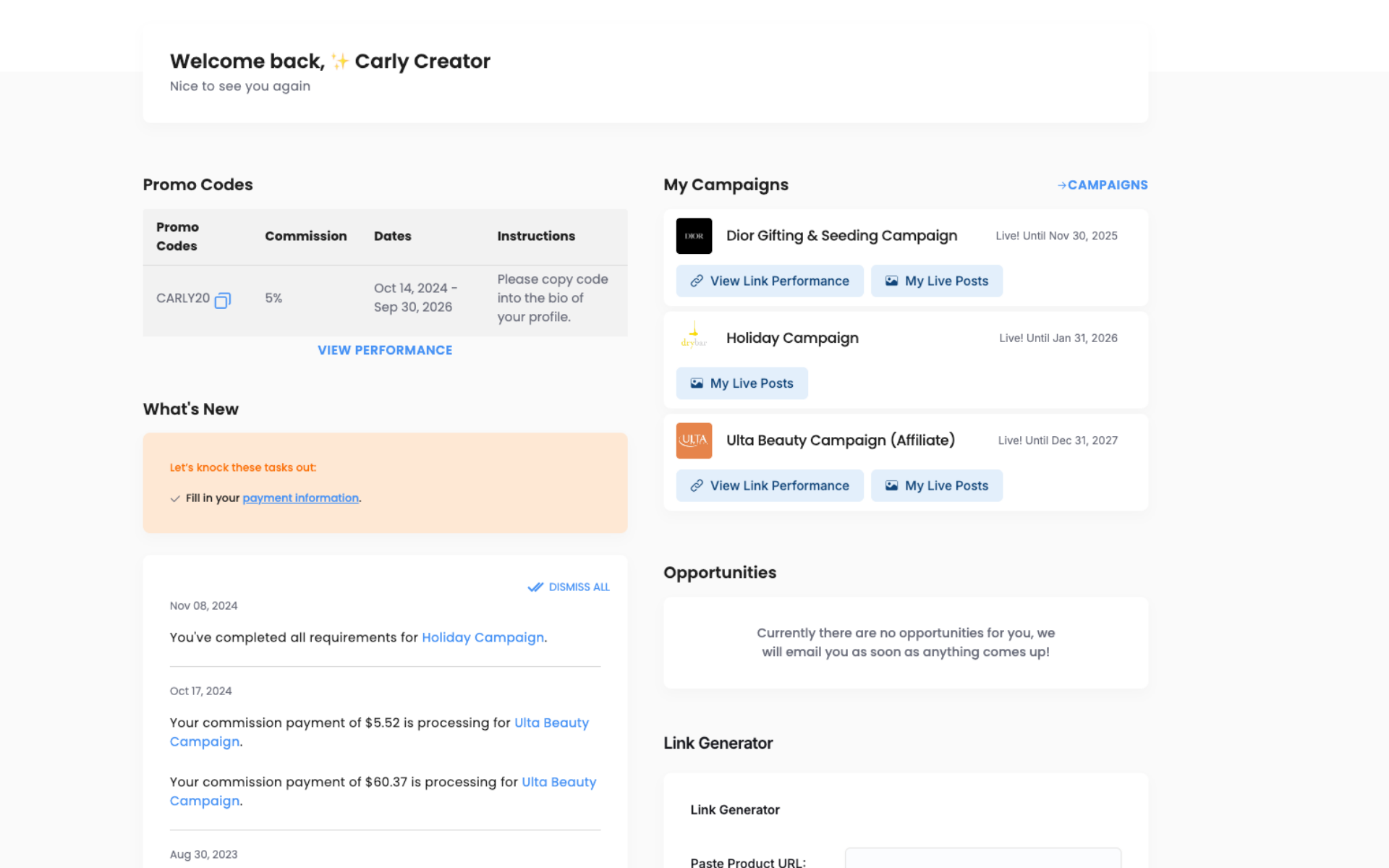
Campaigns manage campaign workflows and multi-stage content approval processes.
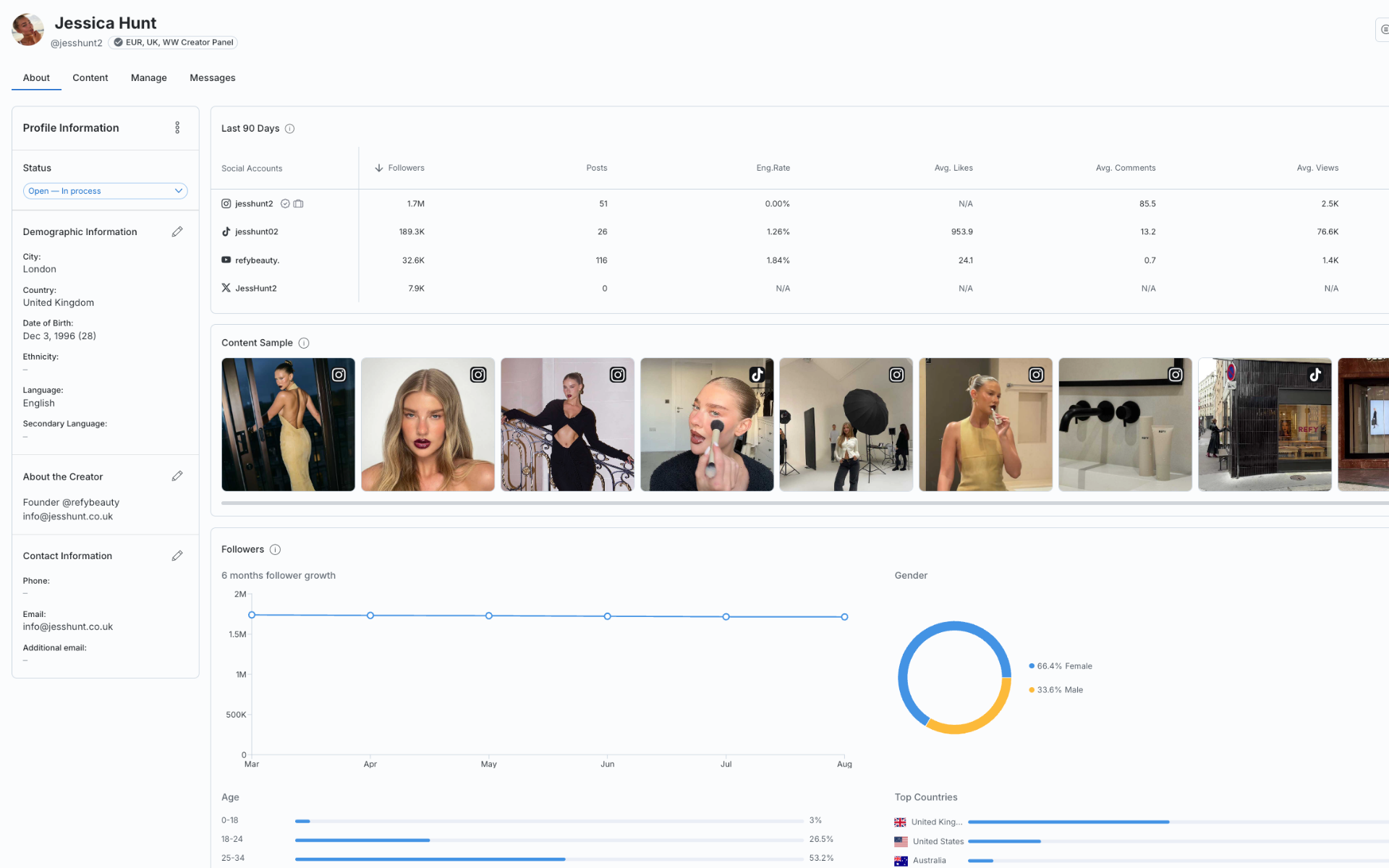
Community automatically captures creator posts and brand mentions across platforms.
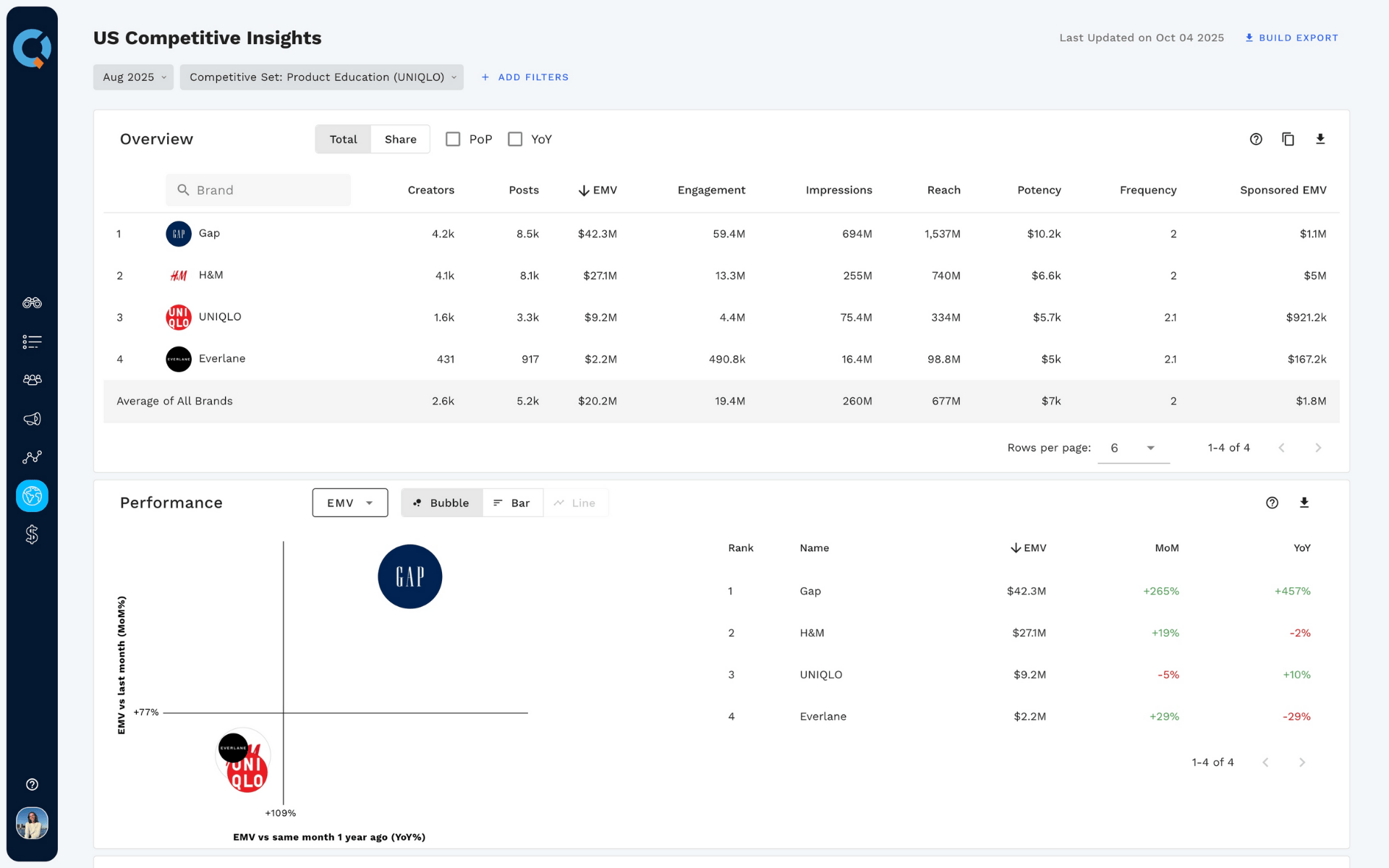
Measurement provides reporting visibility across campaigns and creator activity.
Together, these capabilities create a governed environment where creator marketing operates within structured oversight. The result is a creator marketing program that can scale confidently within regulatory and compliance frameworks.
If that sounds good to you, check out CreatorIQ today.
Scale creator marketing into a measurable growth engine
Creator marketing has become one of the most powerful forces shaping brand visibility and consumer trust for global enterprises. But unlocking its full potential requires more than creative partnerships.
CreatorIQ provides the enterprise operating system that enables marketing leaders to scale creator marketing with accountability, visibility, and control.
Within a single platform, CreatorIQ unifies every stage of the creator lifecycle:
Discovery identifies creators through content-first search and brand mention analysis.
Lists enable collaborative creator vetting and stakeholder approvals.

Campaigns manage partnerships, deliverables, and campaign execution.
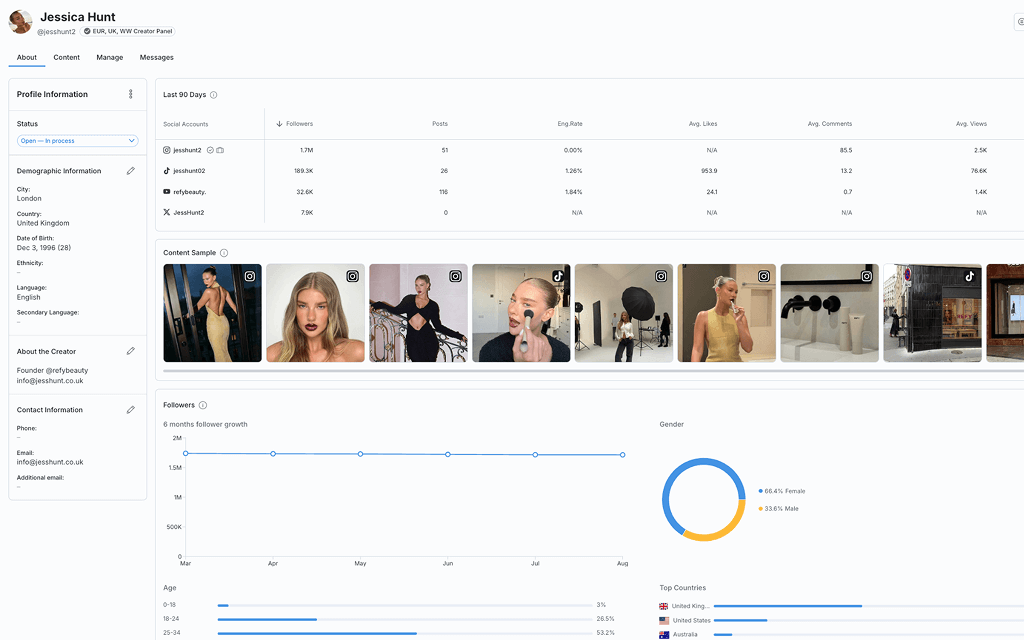
Community automatically captures creator content and organic brand mentions across platforms.
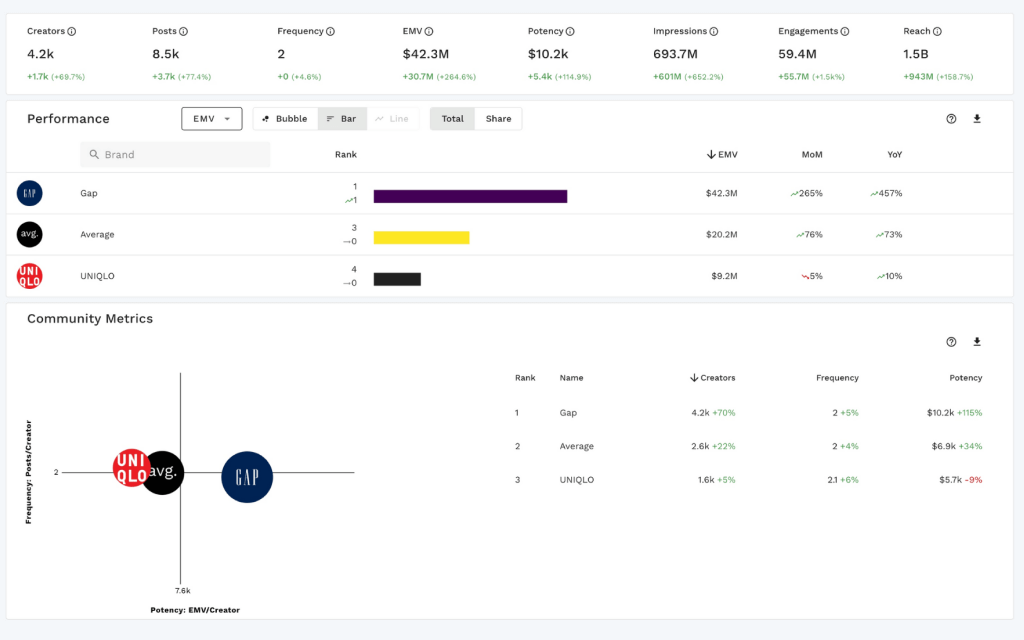
Measurement consolidates campaign performance, competitive insights, and enterprise dashboards.
Together, these capabilities transform creator marketing from a fragmented activity into a unified infrastructure for enterprise growth. The result is a creator strategy that delivers what Marketing Executives ultimately care about most: measurable growth, strengthened brand equity, operational efficiency, and reduced risk.
If that sounds good to you, check out CreatorIQ today.