


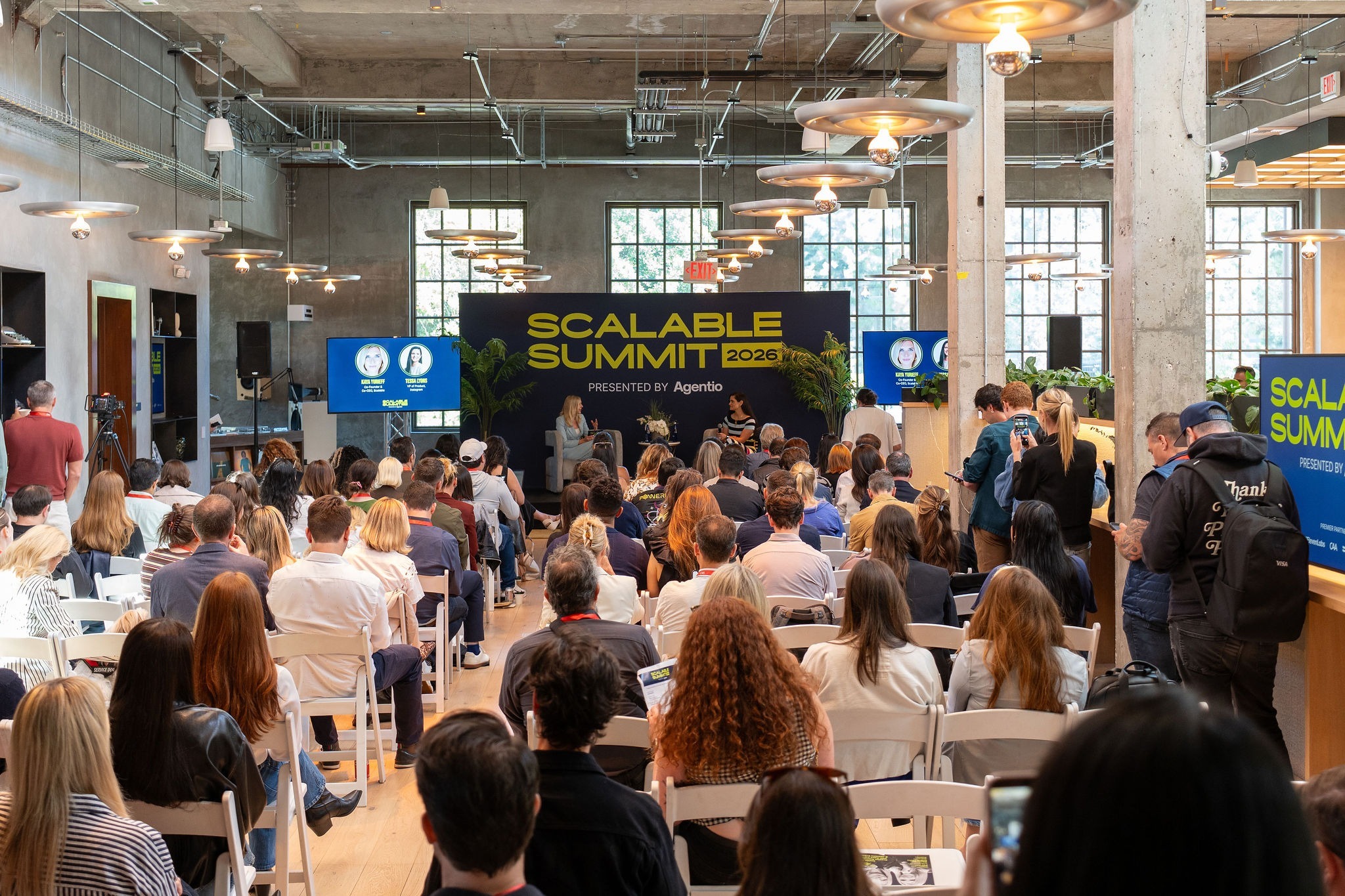
Last week I ventured out to Venice, California for the Scalable Summit, the first in-person event from Jasmine and Kaya’s already successful media company launched last year.
I came to Scalable Summit with one question: what would this room of creator economy leaders say the next chapter of creator marketing actually looks like? After a full day of sessions with social platform leaders, brand CMOs, agencies, and creators, seven things became clear — none of them about whether to invest in creators, all of them about what makes a program sophisticated enough to compound
1. Social platforms are rewarding the craft of storytelling
I saw leaders at Instagram, Twitch, and TikTok speak on what kinds of content are breaking through the noise. Every social platform session touched on the same shift: content volume is losing to the craft of storytelling.
Marisa Hammonds, Global Head of Creator Marketing & Community at TikTok, said TikTok creators posting high-quality content and storytelling see 23x more views and 70x faster follower growth than those who don't. But what makes it high quality? It’s not about high-tech production, it’s about being original, expertise-driven, and intentional. It’s storytelling that has a beginning, middle, and end — and skilled editing doesn’t hurt, either.
“It’s not about long form vs. short form. It’s about high quality story telling — where the content is original, the creator has an expertise or perspective to share, and is intentional and shows personal creativity.” – Marissa Hammonds, TikTok Global Head of Creator Marketing & Community
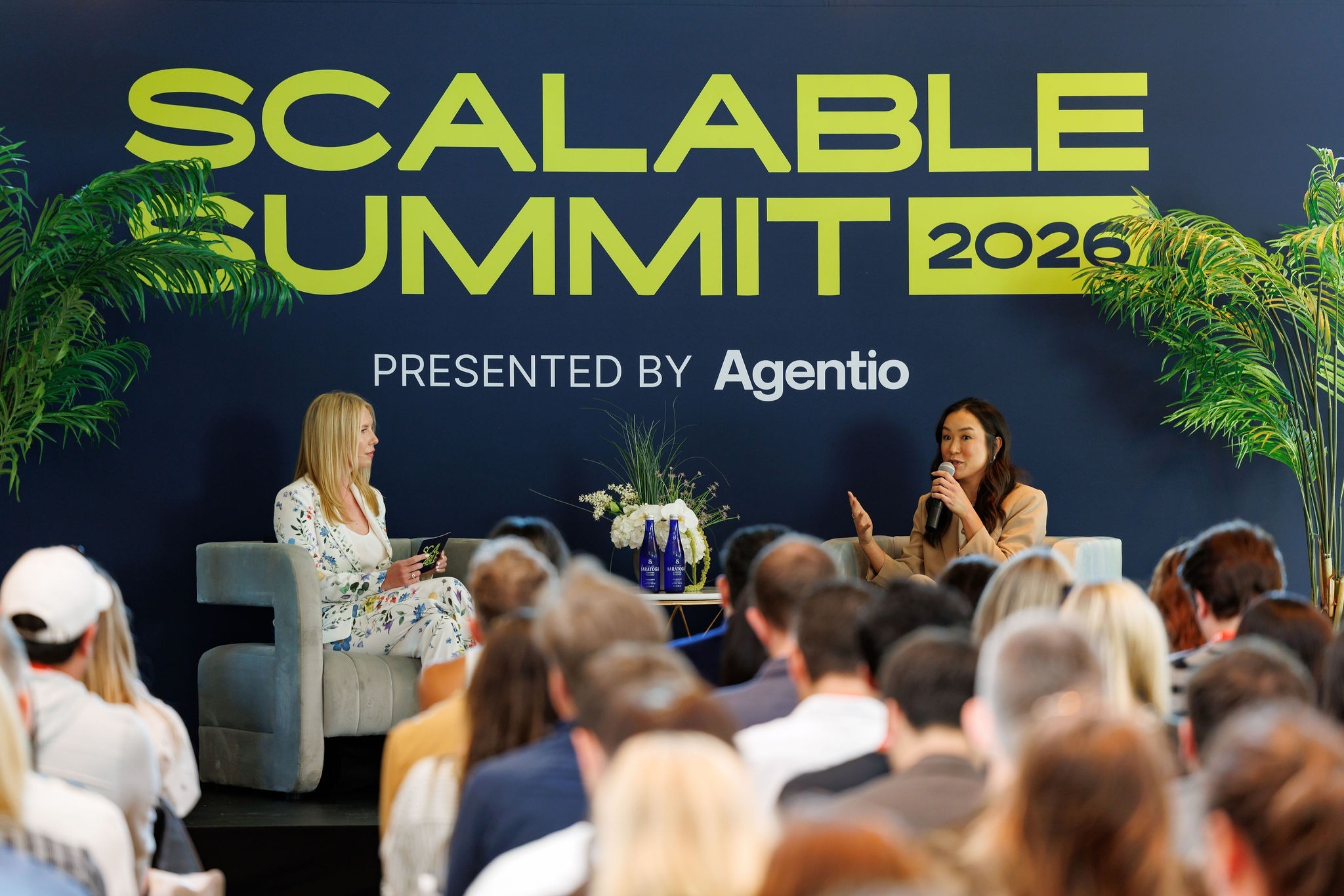 Jasmine Enberg and TikTok Global Head of Creator Marketing & Community Marissa Hammonds. Source: Scalable.
And critically, "quality" doesn't mean "produced." It means thoughtful and compelling, with a beginning, middle, and end. Quality content has a perspective and something intentional behind the edit. The example that stuck: a middle school librarian turned BookTok creator whose content ignited a global reading movement — not because of equipment, but because of genuine storytelling craft.
Hammonds said that two in three TikTok discoveries are now intentional searches. Audiences are looking for expertise and perspective, not just entertainment. The creators breaking through today have a point of view — and they've built a community around it.
The takeaway: Build a community of creators that publish content worth searching for.
2. Niche at scale is the new operating model
"Monoculture is dead." That's how Rich Bloom, GM Creator Programs and EVP, Business Development at Tubi, framed the future of entertainment at the summit.
The model that's replacing it? Niche at scale. Rich spoke about how Tubi serves multiple fandoms of different sizes and finds the overlaps between them. This isn't just a media trend — it's a brand strategy imperative. As Marissa Hammonds noted in her session, the last real mainstream breakout creator was Alix Earle in roughly 2022. What's rising instead: niche creators with unique perspectives — in sports, in BookTok, in lifestyle and learning, in undertapped categories like auto. The opportunity is there precisely because the mainstream lane is crowded and trust lives in specificity.
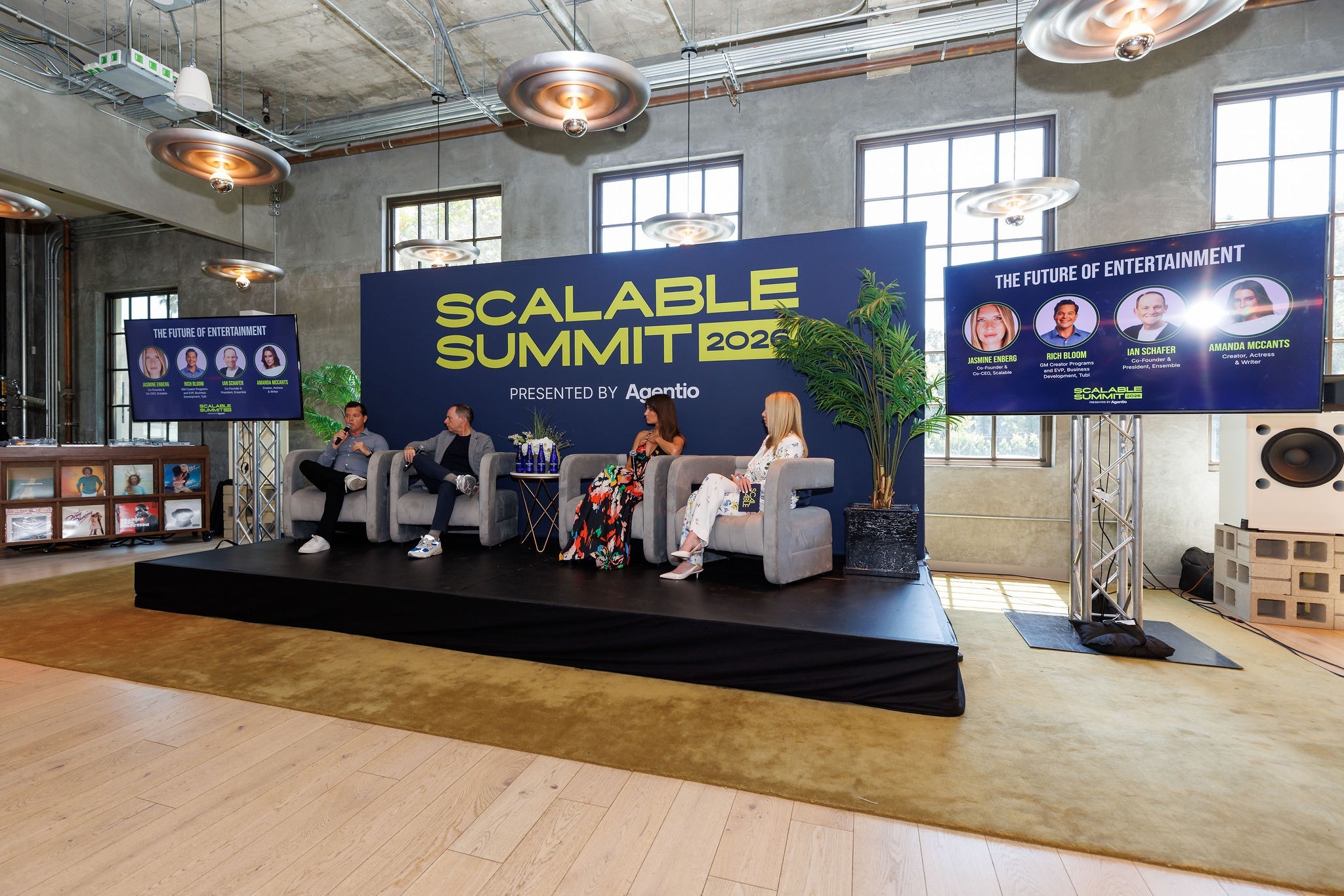 Jasmine Enberg with Rich Bloom, GM Creator Programs and EVP, Business Development, Tubi; Ian Schafer, Co-Founder & President, Ensemble; Amanda McCants, Creator, Actress & Writer. Source: Scalable.
Creators are leaning in and driving engagement—behind and in front of camera opportunities.
TikTok has struck a deal with Tubi to give TikTok creators a pathway to developing their own shows for Tubi. Think micro-dramas for example—90-second “shows”, with about 20-30 episodes per season.
The takeaway: Your best creator partners may not be the biggest names. They're the most trusted voices in the specific communities your brand wants to reach. The content format may change, but the key is to find and address the gap in audience interests and niche content.
3. Creators are businesses — and brands need to treat them that way
Many sessions highlighted a key challenge in the creator economy today: securing budgets to scale a creator program is difficult, and there's a massive gap relative to marketing spend and where consumer attention actually lives.
The disconnect isn't problem awareness — it's infrastructure. Visa CMO Frank Cooper III made this concrete at the summit: the financial system was never built for creators. Irregular income gets flagged as high risk. Revenue sources go unrecognized. Getting paid on a 30- or 90-day delay is standard practice, which is unsustainable for a small business running on cash flow and a content stream of content output. And according to an IAB report, marketers are spending more on boosting creator content than they are paying creators themselves.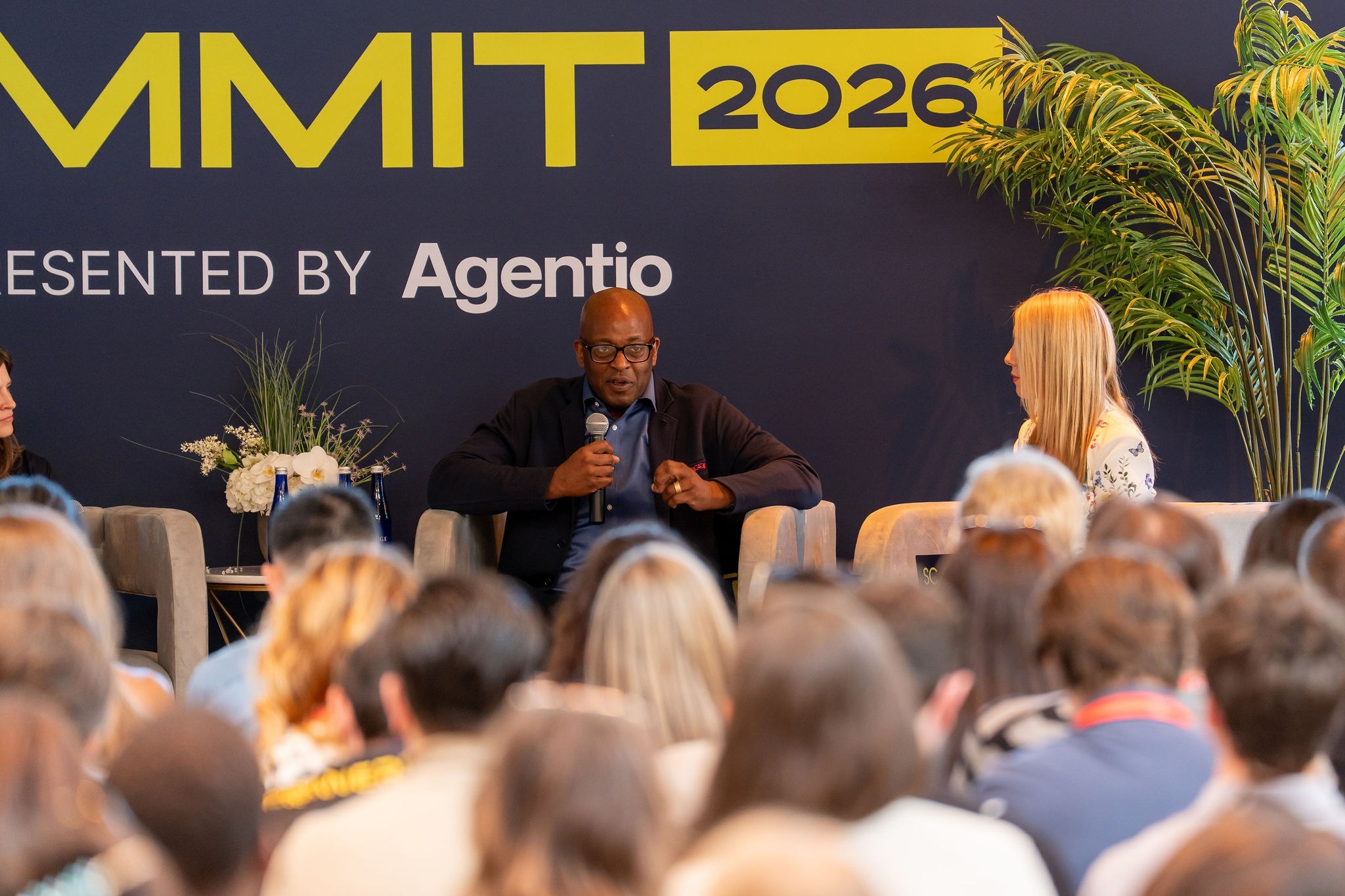 Visa CMO Frank Cooper III. Source: Scalable.
Cooper put it plainly: treating creators as small businesses is one of the biggest opportunities for scaling the creator economy. And it goes beyond payments. Brands need to think about their creators’ need for cash flow, spend management, and long-term partnership terms that actually work for the creator business model — not just their own procurement process.
The takeaway: If you're still structuring creator deals like a vendor transaction, you're missing the relationship. Creators who are treated as business partners perform like them.
4. Your attribution window is probably hiding your case for more investment
Speakers discussed that because of the lack of standardization and long-term measurement, some brands are systematically undercounting the impact of their creator investments — and making budget decisions based on incomplete data.
That's not just a reporting problem. It's a strategic one. Brands are underinvesting in creators because their measurement frameworks don't capture what creator content actually does.
Instagram's VP of Product Tessa Lyons reinforced the tension from the platform side: the move to algorithmic recommendations creates discovery, but reduces creator and user control over who sees what and when. The implication for brands: reach and timing are less predictable than they used to be, which makes long-term investment more important than ever.
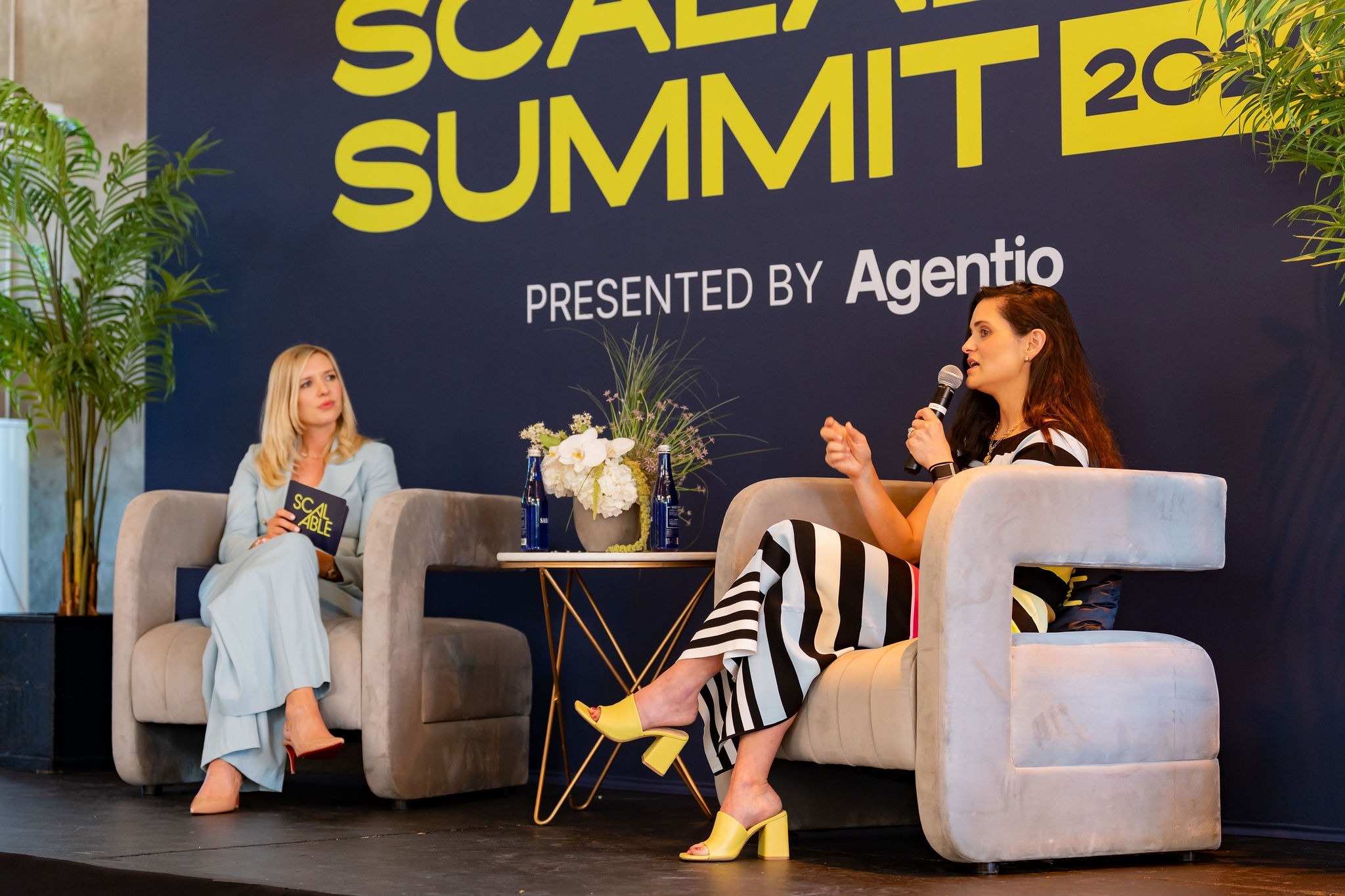 Tessa Lyons, VP of Product, Instagram in conversation with Kaya Yurieff. Source: Scalable.
Adobe's Chief Content & Creative Officer Stacy Martinet offered a framework that resonated: vary your measurement by objective. Use brand lift for long-term partnerships, funnel metrics for campaigns. And step back from weekly CPM anxiety — report quarterly and annually for the indicators that actually matter.
Visa CMO Frank Cooper also spoke about the need for CMOs to work more closely with CFOs: “No more important relationship for a marketer than a finance partner. Some marketers come in speaking a different language than finance. Develop a translation layer when talking about marketing to finance people.”
The takeaway: Speak a shared language with the finance teams who hold budgets so they can understand the value of creators. And audit your measurement window. If you're cutting off attribution at 30 days, you're probably cutting off your case for investing more.
5. Social platforms are evolving fast — and the rules of engagement are being rewritten
Every major platform session pointed to the same underlying reality: the playbook for how social platforms work with creators is being rewritten in real time. And there is a need to balance content discoverability with loyalty, like users still seeing content from the creators they do follow.
“Creators can reach new audiences quickly now because you don’t have to follow creators to see them in your feeds. The downside is creators inconsistently reaching the people who do follow them,” said Tessa Lyons, VP of Product at Instagram. “We want Instagram to be the most culturally relevant app, where people come together. That means giving people control—and we need to give creators more control and power to reach the people they want.”
Instagram is giving creators more control with its Trials feature — letting them share Reels that bypass existing followers entirely to test content with new audiences, then graduate it if it performs. It's one of the few tools actually giving creators agency over their distribution, rather than just serving them to whoever the algorithm decides.
TikTok's Creator Growth Challenge — a 45-day program offering content insights, performance feedback, and up to $30,000 for hitting growth milestones — is a signal of where platform-creator relationships are heading. Monetization is no longer just brand deals. Live shopping, creator rewards programs, and self-serve marketplaces like TikTok One are building out a fuller creator economy infrastructure.
And on the entertainment side: Tubi has built a model where creators retain creative control and own their IP, while Tubi gets an exclusive window. They sign deals on an idea, not a finished product. The result: their most successful original programming was Sideline starring creator Noah Beck.
The takeaway: Understand what each platform is actually building toward — and structure your creator strategy around where the platform is going, not where it's been.
6. In sports, creator-team relationships can surpass press credentials
Some of the most illuminating thinking at the summit came out of the sports sessions. Two numbers from NBC's Olympics creator collective tell a story worth studying.
Geo Karapetyan, SVP, Global Platform Partnerships and NBCUniversal shared that 25 creators in Paris generated ~300M views for the Summer Games in 2024. And while they expected the Winter Games in 2026 to be smaller because of general historical Olympics trends, 27 creators in Milan generated ~450M views. Essentially the same number of creators generated 50% more impact. The lesson isn't to add more creators — it's to get the right ones and give them the access and trust to tell real stories.
As for the LA28 games, Karapetyan called LA the home of the creator economy and signaled the LA28 collective will reflect that. Details to come.
One challenge highlighted by Olympics and Formula One creator programs is credentialing and trust for creators to post about the scene and what’s going on at the sporting events, not the games or races themselves, because of exclusive broadcasting rights. Formula One creator and commentator Toni Cowan-Brown offered a sharp observation: the closer you get to official media accreditation, the less you can actually show or say.
But again, relationship-building can help creators and brands get creative. Cowan-Brown says when she received official press accreditation, she actually became legally restricted for what content she could capture. She says she instead built direct relationships with all 11 F1 teams, 20 drivers, and hundreds of sponsors — and essentially earned herself unlimited access.
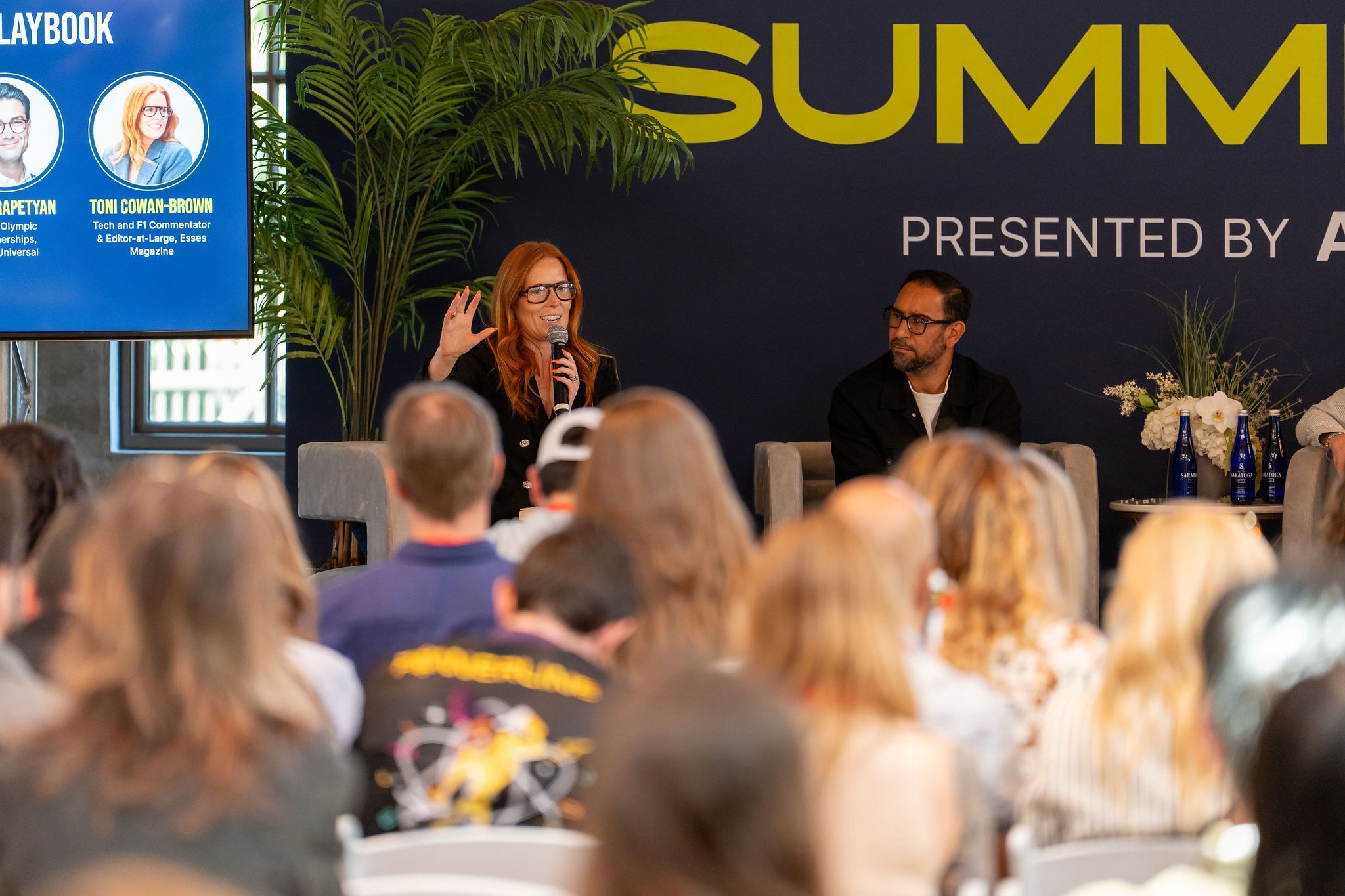
Toni Cowan-Brown, Tech and F1 Commentator & Editor-at-Large, Esses Magazine. Source: Scalable.
It’s a sign of the shifting times: creator relationships can sometimes beat institutional credentials. Audiences follow creators for personal perspective — not highlight clips they can get anywhere else. That's true in sports as much as any other category.
The NFL is leaning into exactly this: using lifestyle, fashion, and culture creators to bring women and non-traditional audiences into football. Rob Santini, VP Global Influencer & Entertainment Marketing, NFL says it’s the off-field content that builds emotional investment that shows up on game day.
The takeaway: In sports — and beyond — the best creator partnerships are built on trust and access, not contracts and restrictions.
7. AI raises the bar for human creativity — it doesn't replace it
AI came up in every session. And the most useful thing said about it came from Visa's Frank Cooper, who predicted a "best of times and worst of times" scenario: a wave of low-quality AI content, followed by a creative renaissance as human contribution becomes more valued.
That captures something important. The creator economy was built on authentic human storytelling — on the trust that comes from a real person sharing a real perspective. AI can accelerate the work. On the brand side it can help with data infrastructure and execution layers. For creators, it can help with scripting, editing, creative operations, and concept development. What it cannot do is replace the right idea, genuine audience trust, or the human story that makes someone stop scrolling.
Instagram's Tessa Lyons acknowledged the current wave of "AI slop" and said the platform is actively working to reduce it. TikTok's session emphasized that the creators seeing exponential growth are the ones investing in craft — original, expertise-driven, intentional. That bar is only going to get higher as AI floods the zone with generated content.
The creators who will win the next chapter are the ones who use AI as an accelerant and show up with something only they could make.
The takeaway is to lean into what AI can't replicate: genuine expertise, authentic community, and a point of view.
What I took home
The question of creator marketing being worth investment is settled. The strategic question is what kind of program compounds — and what infrastructure makes that possible. What Scalable Summit made clear is that the real question is how sophisticated your strategy and infrastructure actually are.
The brands pulling ahead are the ones treating creator marketing like a core business function — with real measurement, long-term partnership thinking, and genuine creative collaboration.
They're thinking about creators as businesses, not billboards. They're building for the long tail, not the 30-day window.
The playbook is still being written. The brands that will shape it are the ones writing it alongside their creators, not about them.
 Source: Scalable.